December 27, 2012

From Dust to Dust in a Little Blue Box

I am not a reader of biographies. One man or woman's story is as interesting, meaningful and/or powerful as the next person's.  I have never, therefore, seen the sense in reading some famous person's life story during the time I should be focusing on living my own story. Recently, however, I made an exception to my own tenet and decided to read a biography of Spalding Gray.  Spalding, one of my favorite contemporary writers/performers, ended his life a few years back, by jumping off the Staten Island ferry. It was Spalding's gift for insight & his unabashed ability to laugh at himself that I always loved.  One of his famous monologues, Monster in a Box, is a detailed, heart wrenching account of his failed attempts to complete a 1900 page unedited novel based on his own mother's suicide. The monster is the unfinished novel he keeps in a box, and which he realizes he cannot finish because he has never been able to resolve his mother's tragic death & abandonment.  Simply put, the monster is his mother's suicide; he himself is the box, which has contained all the grief of this irrevocable loss. When he too died an equally tragic death, I felt compelled to wonder if he had ever finally come to terms with his mother's violent demise. I couldn't help but to make the assumption that he had not, and that if he had, then perhaps things might have turned out differently for him in the end. It is important to proceed with caution where the dead are concerned...to walk and not to run.
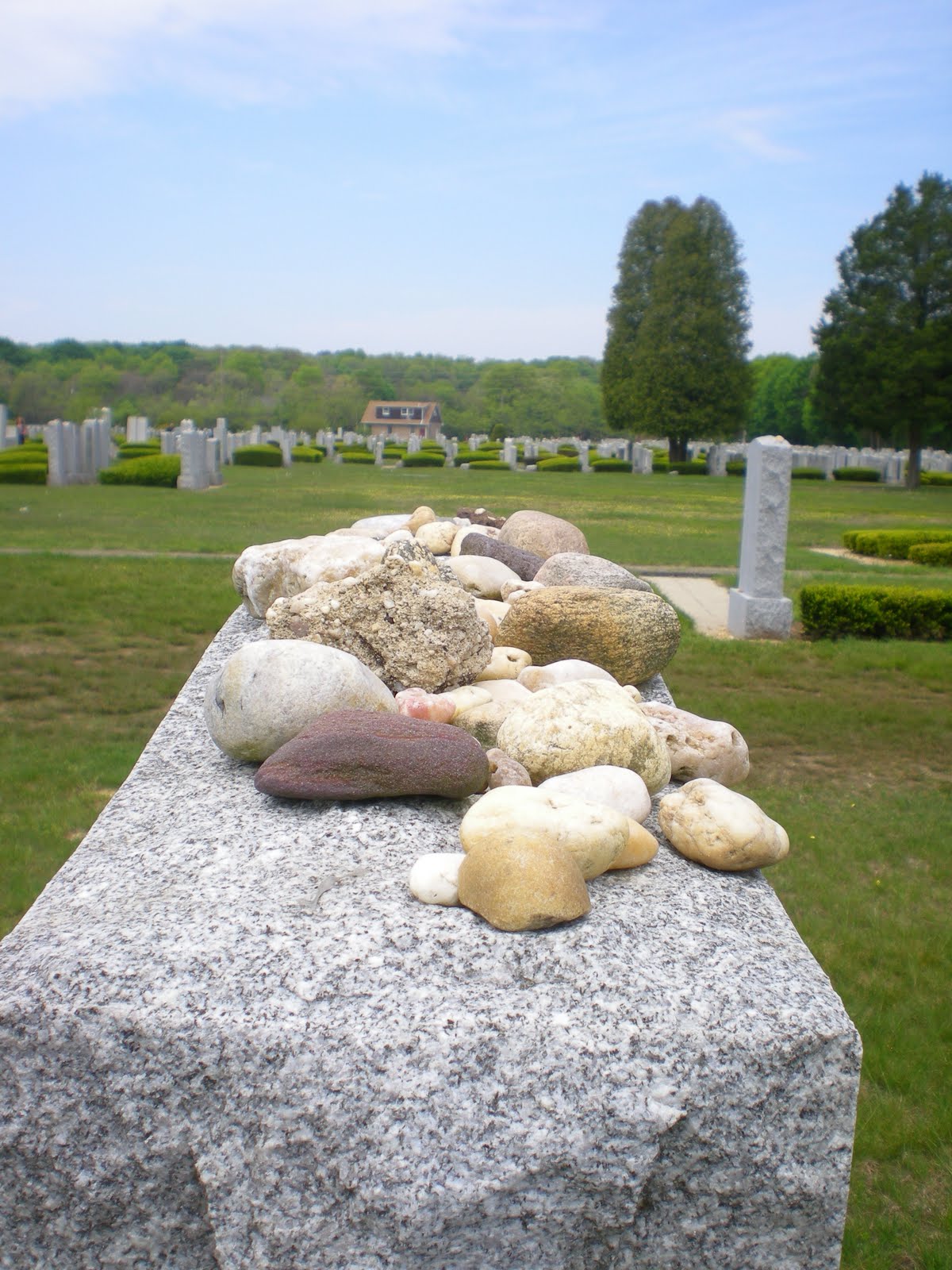
Today I unpacked the box containing my father's remains. It is fairest to say "what remains of my father's remains"-- for in the end his body was divided in more or less four equal parts and distributed among his wife and children. My father was diagnosed too late. He had little time to plan and having always been a reasonably practical man, caught unawares he did not leave instructions for the disposal of his body. There were contradictory reports among family members as to whether he had in the past ever stated a preference for being buried or cremated. The majority in preference of cremation won out in the end. While three of the four parts have been laid to rest in various parts of the globe, the fourth now sits atop my work table in the uppermost room I call a studio.
Cremation is certainly the most expedient and least costly method of disposing of a body, yet so hygienic and informal that it hurts. Significantly more painful than the other alternative; I was surprised to discover. I now clearly see why the rituals surrounding death are so devoutly observed even among the nonreligious. It is really for those left behind that they have stood the test of time and the prevailing lack of genuine religious conviction. These rituals serve the purpose of buying time needed for goodbyes. This small powder blue box I have been holding on to for the past three years is my own monster in a box. I cannot lay my father to rest until I have done all I need to do to let him go. If only I knew what that entailed, I would have purposely set on that course. But mourning is complicated and delicate business; the sometimes subtle processes not always so easy to discern.
When we love someone deeply, they are always taken from us too soon. Though we had always said so much, there was still so much to be said. My father gave me all he had to give. I never doubted that I was loved. One thing he gave me was a love of words and language and of stories. Though I have only a handful of mementos that belonged to him,  I can still hear his legendary stories told in his own melodic and emphatic voice. I feel grateful for this auditory memory I didn't know it was possible to retain. For now, his stories do outlive him and will hopefully be remembered & retold by his grandchildren. Though I fear these too will eventually fade. Already his voice is only with me and in the translation from their original language, some important kernel of his stories is sure to be lost. Time has a way of shredding everything into increasingly finer segments, making dust of it all in its wake. So as precious as words are, they too won't last. At best, the ideas and teachings carried by fading words will find their place in the deepest crevices of the hearts and minds of his descendants.
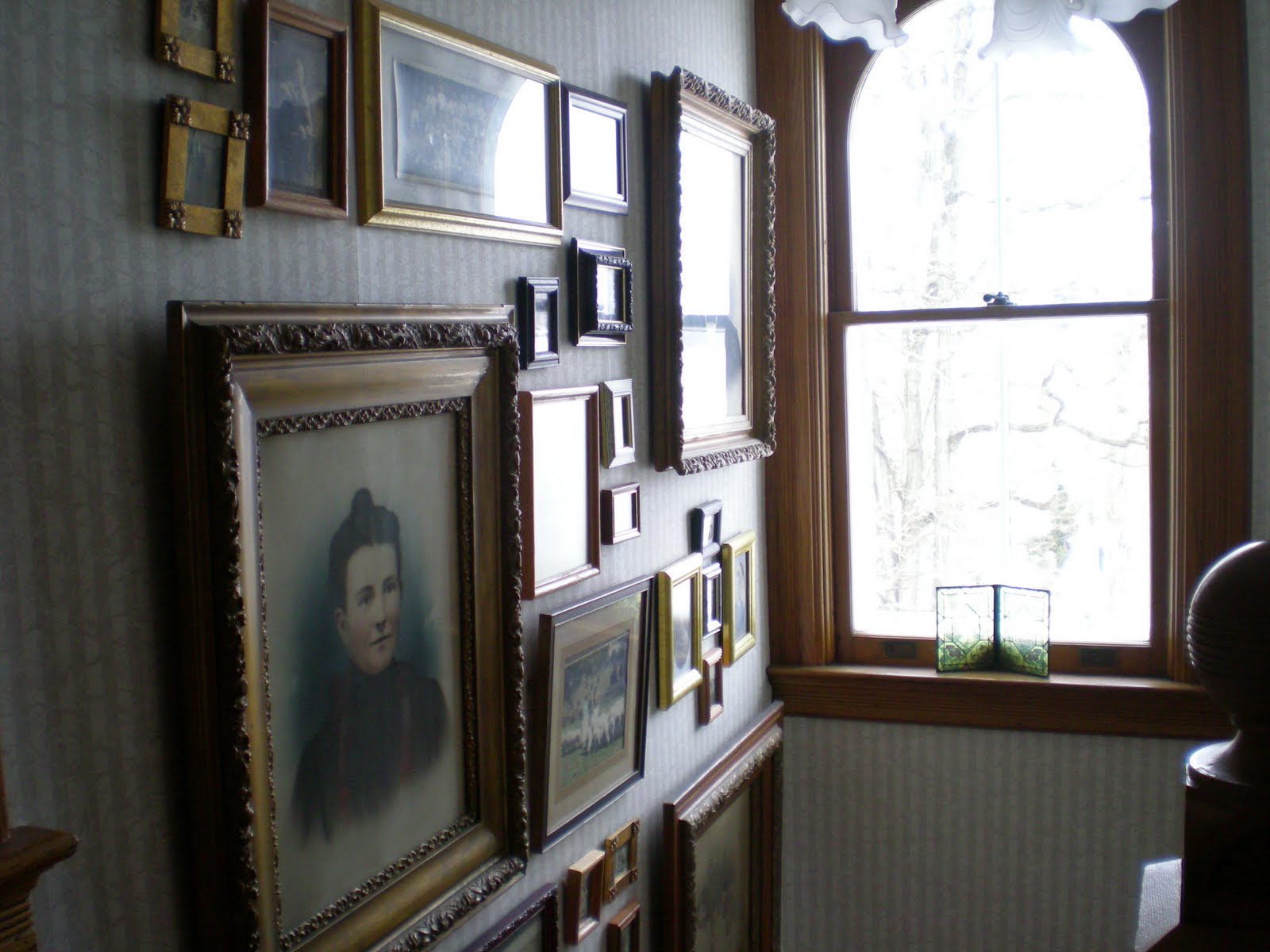
I choose to put my faith in photographs and images and in the memories and stories evoked by these. Sometimes objects and stories make mutually precious companions. Such is the case of a small pewter sculpture of the virgin of Cobre, which belonged to my father and which not unlike him, has traveled across three different countries in half a century's time, to rest in my little corner of Brooklyn. There is a story attached to this icon, a tale full of magic and superstition. It involves a soothsayer and my father as a young man learning about loyalty and responsibility, losing his innocence while his country and his own fate harshly and rapidly change. I remember the fear, awe and respect in his voice every time he confided this story. A level of fear and respect I've never had to know, but for which I'm sure there must be a very special word.

My father lived an eventful, exciting and overall, extraordinary life. Yet, his passing was excruciatingly painful, tumultuous and humbly unceremonious. I find this final lack of poetry unfathomable. It was a grand personal event, to which no one came--a last supper full of empty chairs. In the ending of Big Fish, when the main character Edward dies, all the significant people in his life and stories show up at his funeral. From the everyday family and friends to the fantastic giants and witches, they all have contributed something to the stories that make up his final story...and they are all present to see him off on his final journey. But some endings are not as just. Instead, they are cruelly dissonant. For my dad, there was no funeral, no end of life party. None of the characters show up in the final chapter. My father, having been a man of many lands, was far from home. Those who would have mattered were either already gone, or could not reach him to play their part. This is one of the tragedies of being an immigrant. In the end only I was witness to his last breath. Though for that gift I will feel forever grateful, the silent celebration of his life has been difficult to reconcile.
My intentions are to travel to India to place his ashes in the River Ganges, where souls are promised re-birth. India is a far and exotic destination, expensive to travel to and requiring sufficient journeying time. For the past three years, I have failed to make this pilgrimage, instead making my travels to other  less committing faraway places. I too need the time to say goodbye and so the blue box continues to sit atop my studio table.  Although he himself was not big on long goodbyes, I don't think my father would really mind all that much if I needed him around just a bit longer--if this were something he could grant me, which it is.  In fact, I think he'd probably be glad to stick around even in his present form, for as long as I needed him to. My dad was no hindu, but he was a deeply spiritual humanist who loved mysticism, as well as eastern philosophy and eastern religious traditions. I think that he might have appreciated the ritual of being taken thousands of miles across the oceans for the sake of symbolically being given a second chance. He would certainly understand being taken there by his first born middle age daughter who may still be learning that true stories end wherever they end, not where we think they should end. And most definitely, I do believe he'd appreciate the poetry of being laid to rest in the dirtiest and most sacred body of water in the world, where fantasy, superstition, religion and the mystery of the unknown & of the everyday, can peacefully converge.

November 28, 2012

Teach your children well. It's not just a song.

While shopping for a box of cookies at the corner drugstore, I notice a 9 year old girl has cut in front of me to stand at the nearly empty checkout line.  I am not in a hurry, so I let her go ahead. Unbeknownst to me, her mother is still shopping and has sent her there to reserve her place at the front of the line.  I only discover this when the mother shows up with a brimming shopping basket and takes her place in front of me. Since the line is only two people deep, I am perplexed by this seemingly unnecessary maneuver. I point out to mom that, although I do not mind waiting, I am curious as to whether she has noticed me standing there.  She, in turn, is baffled by the question.  Do I not see her daughter also standing there...?!
I would like to believe that as we gain experience and awareness, each generation is an improvement on the next. I would like to have faith in the concept that our love for our children includes a wish that they will supersede our own shortsightedness. That our failure to reach out to others in kindness, will only serve to inspire our children to further extend their own generosity.
Teach your kids to lie and cheat and before you've had time to notice,  they'll be doing it to you. Emphasize to them the importance of getting in front of the proverbial line of society, irregardless of what they must do to achieve this place, and you will have forfeited your (and their) humanity. 

April 30, 2012

A Sad Treatise On The Meaning of Meaninglessness

WARNING! The title of this post has been appropriated in part from Werner Herzog's* description of his own contribution to this year's Whitney Biennial.


Bored at the Whitney.

Seeking Meaning and Finding Meaninglessness.

These might have been the options I'd considered as headings for this blog post, had I not, in a somewhat desperate effort to find an explanation, frantically been scouring the pages of the event guide that accompanies this godforsaken exhibition and come across one of my favorite filmmakers' quotes in description of his own piece in the show. Oh, but wait; isn't he, well...German?...and hasn't he been, well...making films for a very long time?... and well, isn't this the Whitney Museum of American Art's Biennial exhibition-- a show intended to focus on contemporary art within U.S. borders?.... And, as if to add insult to injury--why is he being lauded as a "romantic visionary, who is best known for his unorthodox approach to capturing authenticity in his films"?--never mind that I believe both of these to be true... but then, why is he in this show?... I stand confused.
Admittedly, I myself, have not been feeling particularly inspired lately, and so approached my visit to the Whitney Biennial with high hopes of changing my despondent mood. To put it succinctly, I had hoped to feel revitalized, renewed...well, let me just go ahead and say it then: Inspired. Oh, but has this become a dirty word? I obligingly paid my $16 admission fee and in return, expected paradise or even hell. Some stirring, some kernel of feeling or provocation might have been enough. Any surge of emotion would have been preferable to purgatory, to numbness, to absolute boredom. To the significant frustration of my family and friends, my museum visits are usually daylong events, ending with me begrudgingly agreeing to exit, despite a consistently gnawing feeling that I have prematurely departed, albeit with an armful of notes for referencing and cross-referencing my newly acquired insights and discoveries. See, I too am somewhat of a closet anthropologist of all things culture. The 2012 Whitney Biennial features such a sad array of uninspired, desperate art that I was very willingly ready to depart after only a couple of hours of diligently combing through each and every one of the 4 1/2 floors it barely occupies, in search of something. It came as no surprise that on the day of my visit to the Whitney, most of my fellow visitors were huddled in the bar-room like set installed for screenings of Wu Tsang's Wildness, 2012, which documents the underground E side L.A. Latin/LGBT immigrant community; or were crowded into the Film/Video Galleries listening to Amy Taubin's interview with independent filmmaker Kelly Reichardt, whose three films spanning from 2006-2010, were also being screened. Once again, the pull of real life human interaction wins out over the stale, unemotional 2 & 3-D pieces claiming conceptual and intellectual profundity, but devoid of any visceral participation, which constitute a disproportionately large part of this year's Whitney Biennial. The one other saving grace to the bland installations is Dawn Kasper's personal and authentically executed Nomadic Studio Practice Experiment. I admire Dawn's resourceful ingenuity and can't help but wonder what she will come up with, once she has exhausted her list of museum hosts. It isn't the conceptual nature of most of the pieces in this year's biennial that I take offense to. I have great respect and love for conceptual art which raises questions or makes a statement prompting exploration, or provokes a shift in thinking; for isn't the role of art to take us beyond...well, at least beyond, the obvious?
 Since I landed in Soho in the early eighties, practically penniless, with one old dusty-blue suitcase in hand, I have seen art and artists come and go. A minority went the way of fame and fortune, in the blinding limelight that was the art scene of that decade, or faded into the few remaining hidden backstreet lofts that still survive the outdoor mall Soho has become; or died from epidemics, cancer or despair; or in the case of those more given to practical resilience (myself included), moved into more affordable quarters in the border boroughs and adopted lifestyles alternative to the already alternative lifestyle of an artist life in NYC... just in case life wasn't already challenging or complicated enough as a result of that small original transgression. But this is the way of the living, is it not? Change and Transformation. Only passion begets these; and passion back then was as easily exchanged as 4 quarters for a dollar, and for some of us--those who never made it to the Whitney, alot more common. But passion and inspiration are still all around us, and to my understanding, passionate and inspiring art continues to be made, even in those Soho backstreets and in the outer boroughs. So, why are the curators of the Whitney Biennial finding it so hard to locate? As artists, we notoriously make use of our personal experience and react to the times in which we live. If nothing new remained to be said, then no message would need to be communicated and art would no longer have a purpose. This scenario is unfathomable. Contrary to the apparent theme of this year's participating artists, artists continue to make art and the world keeps looking at it and being affected and alas, even transformed by it!
 The art that constitutes the 2012 Whitney Biennial is neither unorthodox nor authentic, and therefore, tragically lacking the power to transform. I am not suggesting that the curators of this year's biennial should have gone to any great lengths to find contemporary painters, sculptors or performance artists with the power to inspire or provoke. Perhaps, that would be a bit passe. Perhaps the trend to seek the more seemingly original, the more au courant--is a need that supersedes that of our recurring, inexhaustible quest for meaning. New things keep happening all the time, and their newness does not automatically make them noteworthy. The pieces being displayed at this year's biennial are laboriously explained in the copious text on the display tags that accompany them. Throughout the exhibits, the stated message is that as meaning is largely ephemeral, meaninglessness must be the answer to all complex questions. But judging by the extensive explanations in text, there also appears to be some insecurity in the art's ability to carry this message. Was this the point then--? Frustrated effort?... or did I blink and miss it? Is the role of the Whitney Biennial to show us the thread that stitches along the collective unconscious of the contemporary art world? or is it to sew in a thread of a particular color and tightly seam it shut? If the first, then we can gather that humanity is feeling helpless and hopeless and that a great sense of apathy and spiritual vacuum continues to pull artists with their dusty-blue suitcases to the fringes of society and dark corners of metropolises the world over and they are making art that nobody sees or cares about. Oh, but wait...this art is at the Whitney! People are seeing it! So that point is irrevocably moot then!
The activist in me is wildly kicking. I refuse to believe that this is the brave new world of art. If the statement at the heart of the 2012 Whitney Biennial is that as a species, we are feeling the need for meaning and purpose but there really isn't any, yet not only do we choose to continue to make art irregardless, but choose to accept the perceived meaninglessness and futility of living and art making; then we have become a sad lot, indeed.
Still, I take comfort in knowing that for the price of an admissions ticket, at the museum gift shop one could buy a pack of edible organic sidewalk chalk, instead.

*Original quote by Werner Herzog: "an extended essay on the meaning of meaninglessness"

July 27, 2011

Divining for the source


I have been thinking a lot about community lately.  What is it? Where does one find it? Can you take it with you (ie. when you move out of town, or go away on vacation)? I had always thought  "community" to mean a group of people who live in one's immediate locality, as in a neighborhood.  The word, of course, has extended references to cyberspace (as in, on-line-community) as well as to  groups with a common interest or affiliation (ie. a community of writers or artists). These are all based on either physical or intellectual proximity. But it isn't any of these communities that interests me. The type of community I've been thinking deeply about is much more difficult to discern. Sometimes it exists within a larger, more traditionally identifiable environment,  but it is never limited by constraints of space, or even of time.
 For the past 5 years, I have been an active member of my local community garden.  Our garden is not unlike any other organization, in that it is made up of a fairly large group of individuals, who do not always get along, or agree with one another. Some just right out dislike each other.  Disagreements often arise around issues of whether there are not enough trees (too much sun makes it difficult to find places to relax or read a book), or too many trees (too much shade limits the growth of the vegetables and flowers)...Some believe in ridding the garden of furnishings made from plastics and other non-organic materials, while others rally for more durable and cost efficient tools.  More often than not, these differences of opinion are not prompted by questions of practicality versus aesthetics (function versus form) but are tainted by personal preferences and personality differences.  It is not a perfect world--whatever that means--and yet, it is perfectly imperfect.  If it takes a village to raise a child, some might say that it takes all types of people to grow a garden. And indeed, there are some things on which, I think it is safe to say, all members agree--  Our garden is a beautiful place.  It is a natural sanctuary.  It is a much needed haven in the midst of a very urban environment.  It is lovingly cared for.  It is in great need of a reliable, independent water source.  
Since well before I had even heard the name of my Brooklyn neighborhood uttered by anyone, the garden existed. Out of the rubble of several homes leveled ages ago to accommodate the development of our only  subway line, its founding members had lovingly brought it into being. Long ago (also way before my time),  a request for running water had been made to the NYC Dept. of Parks and Recreation. The lack of responsiveness from city officials, did not deter the progress and success of our little oasis. Well aware of the usual inexpedient manner with which government agencies respond to civilian requests, garden members have patiently found ways to water the greenery. A couple of neighbors have for many years, allowed the water to be routed from their own backyards, clever contraptions for collecting and recycling rainwater from their roofs have been devised and many a watering can has been filled and refilled from the pickle barrels put to use for storing the precious resource. One unexpected day, however, our world would be turned on its head and the NYC Parks Dept. deities would entertain themselves by showing up unannounced, to give us water.  Contractors arrived on a particular Wednesday morning, and did what they needed to do.


That is-- they took out a 12 foot length of the 7 foot high iron fence which surrounds the garden, replacing it with the cautionary orange lattice tape used to demarcate construction areas.  Later that evening,  a high official (who also happens to be a neighborhood resident), stopped by to inform us of the areas that would need to be destroyed, in order to accommodate the long awaited water source. These areas included the beautiful rock perennial garden and strawberry patch, as well as several small trees and many flowering bushes. The garden would be officially closed to the public and declared a construction site. Cries of outrage and frustration ensued as those present began to take in the scope of what was to come.  Quickly we began to  realize  that there was little to be done and that immediate action must be taken to minimize the outcome of the imminent damage. The demolition of a significant portion of the garden, we came to realize, was a necessary evil that must be accepted for the sake of the greater good. The greater good... now THAT is a concept of great interest to me. Most of the friends I have made in my neighborhood, I have met at the garden. Still, there are many members with whom I have little in common, except for this green knot that binds us. That is the one thing that I find most profound about my experience as a member of this particular community. The moment we realized that something must be done, the few of us who happened to be on site, without question or hesitation, pulled out the member roster and our cell phones and began to call every member. It was early evening, the inconvenient time when most are sitting at dinner or just arriving from a long day of work. Yet, within the hour, there arrived a sizable number to help dig up whatever could be saved. By nightfall, the entire area had been dismantled and much of the plants temporarily relocated. All differences were put aside. Members who generally prefer to ignore each other, working closely to complete the task at hand. For work toward a common love, belief or goal, binds stronger than any similarity of character, culture or race. 
A short while ago, I went through great efforts to convince my employer to hire a woman I barely knew, because what I did know was that she was miserably employed in a job she hated.  A short time later she overstepped the boundaries, and after I called her on it, she no longer talks to me. We work in close proximity and in similar capacities, but the meaning of our work is different for each of us. There is no binding force. It saddens me that loyalty can be so fickle.
One week ago, a young Hasidic boy was killed only a few blocks from where I live. The child lost his way and asked a recognizably Jewish passerby for help. He died at the brutal hands of someone he recognized as a member of his own religion and therefore had thought to be trustworthy. These are heart wrenching lessons which I find completely unfathomable.  Neither locality, profession or religion serves my need for community. 
I don't mean to imply that I have never failed in my communal responsibilities, far from it.  I am no less guilty of hideous acts of disloyal behavior than anyone else that I have ever known. My question is more about what binds people than about what separates them;  about what common bonds have the potential to build community, rather than about which destroy it.  For perhaps, if we can but make a genuine effort to dig inside our own hearts and  identify that which deeply matters to us, we might be able to put aside our differences and locate that vital kernel of love, that thing (whatever it might be) that is truly binding, even in the midst of our imperfect relationships. 


September 29, 2010

BERMUDA SHORTS

How Did I Get here?
Last month, I found myself on the beautiful and touristy island of Bermuda, with my still willing twelve year old child. How I landed on what was for me, an obvious unlikely vacation choice, can only be explained in the context of a year filled with stressful events, too busy a work schedule and a major move into a new home still covered in plaster dust and missing a working kitchen. One week before my scheduled vacation--yes, seriously, this is true-- I found myself without destination.  I was seduced by the hard to believe fares to Bermuda. Unfortunately, my search was less than thorough, or I would have realized that the cost of a Bermudian vacation actually starts, after landing. The cost of living, in Bermuda easily doubles that of NYC, reason why, I quickly realized, there are no hippies on this island. There are no hikers, no backpackers, no alternative travelers, at all. Basically, I was a tribe of one--well, two. This is a tiny but confident first world country. There is no visible poverty here, no haggling over services. What you see, is what you get, and this time around, that was OK with me. We arrive with our usual carry-ons--one for clothing, one for books to last us two weeks. That was, afterall the unusual goal of this year's vacation-- not exploration, but rest.

Room At The Inn
Inspite of my relentless failed quests for available, let alone, affordable beachside resorts, my good travel karma won out in the end. A few days before our flight, I was able to secure a lovely room in an independently run B&B in the wonderfully quiet town of St. George's. St. George's was settled by the British in the 1600's, remaining most memorable predominantly for its timelessly gorgeous architecture, which has secured the town its place on the list of UNESCO World Heritage Sites. The cotton candy colored cottages and narrow, winding streets, make St. George's a perfect town for those who prefer walking to driving, or riding on pink & blue buses, to taking cabs. Our B&B turns out to be a beautiful 360 year old cottage tucked away on an almost forgotten backstreet, a two minute walk from the center of town. There are two guest rooms, but except for the  occasional one night stay, we are the only guests. We have the whole place to ourselves. A simple continental style breakfast, snacks, water and an occasional glass of wine and ice cream cone, are provided. There are two live 'free range' guinea pigs roaming in the backyard. They feast on the garden greens and mow the grass in neatly even patches. 
Our hostess is a spunky middle aged Canadian living alone with her precocious nine year old daughter. She's running this B&B in an effort to earn her livelihood and maintain this oversized cottage after the passing of her late Bermudian husband, who suddenly died less than a year ago at age 50 from a rare form of cancer.  In the face of disaster, some just grow stronger. Shelley and Avery are the kind who ask if there's anything that they can do for you, and actually mean it. They accomodate our usual pursuit to stay off the beaten path, by driving us to their favorite secret beach. It turns out to be the one and only beach we will return to more than once. It consists of a lone cove, followed by long stretches of private paradise, housed in national park lands.  It is perfection. These are people I'd be friends with, if they were my neighbors. 

Made In Bermuda
The island of Bermuda is actually a number of tiny islands strung together by long, narrow bridges. The entire length of this small island archipelago runs just under 20 miles. This makes the exploration of the entire island, in two weeks' time, an easy task, even while spending the bulk of our days swimming and playing in the turquoise waters & (sometimes pink) sandy beaches. It is a fallacy that Bermuda beaches are pink. I remember my disappointment at discovering this fact. It wasn't until we'd been there a few days, that someone pointed out that we must go South to find the famed pink sands. So, South we head. We visit a different beach everyday. We collect samples of the sands, to bring home. It beats buying small vials of the pinkstuff at the souvernir shops for $2.  I find the concept of paying for sand, even more absurd than that of paying for water, absurdity to which I have grown accustomed. My 12 year old daughter is disappointed that this place is "something like Pennsylvania"--She means, I think,  that it does not feel indigenous or adventurous. It is indeed a very clean and tidy place, a stretch from that of our usual vacations. She does agree that the beaches are heavenly. Bermuda is, in the end, all about the beaches. We take a ferry to the city. The city is Hamilton, where cruise ships the size of twin football fields dock each day. The streets are full of shops. There is nothing I need or want from these places. The many forts of Bermuda bore me, their underground galleries are frightening, their cannons, stale and dead, anger me. I do not like forts or instruments of war. They are skeletal reminders of death and destruction. I don't understand what people find of interest in these places. 
I am omitting any discussion concerning the british legacy in Bermuda, as it concerns slavery, as racial matters tend to be much too complicated to contain in a venue this informal. The Spanish moss tree in the garden is fabulous, though. It was worth the trip here just to see it. We have 30 minutes before catching our ferry back, and it's starting to rain. We duck into The Irish Linen Shop. I swear I've seen those same tea towels in Chinatown for a quarter of the price. I spot a rack of blouses on sale, which upon closer inspection, indeed bear the label "Made in Shanghai". They are coyly advertised as "Hand Embroidered".  Of course, they are.  The one thing that is definitely a Bermudian original, is the Bermuda shorts. They are sported by all, including postal workers, police, waitstaff, businessmen, and are always worn in accompaniment of black knee highs and black dress shoes. 

A mother, a daughter, and twelve beaches
After our days of swimming, our evenings are simple ones. We have our evening meal, return to our cottage, and read. I read The Old Man And The Sea, one of my late father's favorite novellas-- in addition to its inherent literary value, I'm sure that one of its most alluring features, for my dad, was the fact that Hemingway wrote it while he was living in Cuba and that it is the story of a Cuban fisherman no doubt much like those who filled my father's childhood memories. The story is about struggle for survival, compassion and perseverance. The old man's character is so much like my father's was. Reading it made me feel that he was close by-- on the island, with us. I read it for him, for both of us.  I also read Wicked--The Life and Times of The Wicked Witch of the West. This I do at the suggestion and insistence of my 12 year old daughter, who introduced her recommendation with the phrase "it's SO you".  This is the third time we've gone on a mom/daughter vacation alone together, and books have always been one of our most natural sources of  bonding.  I have yet to figure out which part she meant, but I did enjoy the book. Inquiries into the nature of good and evil are always good, regardless of whether or not I agree with their final verdict. The meat is in the questioning. Inspite of the annoyance it sometimes causes the parent in me, I feel truly grateful that this budding young woman understands the value of questioning. I think that it is a good recipe for the forming of character, as well as for fostering sound judgement in adolescence--since personal responsibility must directly follow the road of the choices made. Writing is another passion we share. It is a vehicle for questioning, thinking, figuring life out, exploring the intricate ways in which everything is built of multiple layers-- nothing is obvious, or simply deciphered, but for lack of questioning.  The means by which we reach the end, is always, in the end, more important than the end itself.  So, on our little Bermudian adventure, we also write together. I write the better part of this entry with purple ink on real live white sheets of paper--the visceral quality of script flowing from my felt tip pen feels at the edge of becoming something else,  ephemeral and soft, yet powerfully physical and concrete-- like the blooming of childhood into womanhood.  I don't recall the last time I wrote this way.  This part I do just for me.

Oh, and about the shorts...well, they just look, utterly ridiculous.

June 06, 2010

The Seriously Crooked Way Of The Middle, Before The Cracking Of The Skull

In the last year, I have participated in a disproportionately high number of funerals, burials, shiva sittings, memorials services, gravestone unveilings, baby showers, baby namings, christenings and landmark birthday celebrations.  It has been an overwhelmingly busy year and frighteningly indicative of life at the middle.  Here, I am unfortunately, not referring to the Buddhist Middle Way, but rather to the lifestyle lived by the middle aged middle class, in middle America. The specter of this monster has always frightened me to the core, if only because I am accustomed to dancing a gentle waltz between extremes. I do not favor straight lines, and it has always seemed to me that to mediate the middle road, one must navigate in relatively straight pathways. Yet at this point in my life, I find myself unmistakably in the middle of the middle. How did I get here? I see those around me dying, the other half being born. I find myself thinking about safety, about prudence, about providing for and optimizing livelihood for the next generation. It's a new and strange feeling. Birth and death rituals are important in every culture, as lives leave us and as we welcome new lives into our tribal circles. Our views about human existence expanding all the while, bearing witness to the nature of this complex journey. The middle is a crucial point at which there is still time to turn back and change our choices before proceeding further. My father suddenly died last year. He was diagnosed with late stage lung cancer and passed away within 2 months of his diagnosis. He lived a middle class life punctuated by dramatically radical decisions, that in summary, made his life less than ordinary. The closer we come to one another, the more clearly we are able to see the small and large actions that make a life extraordinary-- all of our lives. My father did not get to live into old age. This seemed to me a great loss, not only because I miss him terribly, but because the integrity of his being was so transcendent--something to be maintained and nurtured as we age. Something, that I hope he passed on to me. At this middle point of my life, I have come to the humble conclusion that everyone's life is in fact, quite extraordinary. Our small actions are large, the actions we perceive as large, sometimes in fact, turn out to be significantly small.
During a trip to the sacred river Ganges a couple of years ago, we stayed at an inn a short distance from the burning ghat. Day and night the fires that consumed extinguished human lives lit up the view from our balcony.  I felt an irresistible fascination with the burning of the bodies, the smoke rising to the skies, the unmistakable scent of burning human flesh. I could still recall that scent, which six years before had for weeks lingered in the air of our Brooklyn neighborhood after the attacks on the WTC towers.  My child was still a toddler then, and I feared for the damage to her developing lungs. Yet, I wanted to breathe in that scent, keep it near, as a reminder of what we are and of how easily it is all consumed into the ether. Deaths and births are always unforgettable events. The lists of names and photos of the victims of the 9/11 attacks posted all over the city, carved a permanent folder of emotions and memories that will forever live in the consciousness of every new yorker I have ever known. To most of us, these people were strangers, yet we were all touched and deeply affected by their lives cut short, by their humanity layed open before our eyes.
The powerful Hindu custom of Kapalakriya involves the eldest son hitting and cracking the burning skull of the deceased parent with a large bamboo stick, during the last stages of cremation.  After the cracking of the skull, the son turns and walks away, never looking back. The symbolic spiritual purpose of this ritual act is to help release the soul of the deceased parent from its entrapment in the physical body.  From an outsider's point of view, and therefore, a less religious and more psychosocial perspective, I think that it is something more. What if the secondary role for this practice is that of forcing the mourner to a definitive severance of all connection and attachment with the physical identity of the parent?  I believe that it is not just for the sake of the deceased that we crack the skull, but for the benefit of the mourner, as well. For if we can detach ourselves from clinging to the physical representation of a loved one, we can hold onto that which is more ephemeral, but much more long lasting-- our relationship to that life, and its significance on the evolution of our own. 
There is no need to look back, for the substance of a life is but what is survived in those who have been touched by it. It is survived in the here and now of who we are and what we do in the world. Death and birth both have the power to awe. The magical appearance and disappearance act they perform always strengthening tribal ties, sometimes only temporarily-- but more importantly, often immediate and reliable at the time when it is most needed.  At this point in my life career, I am starting to consider that perhaps the middle is something to be celebrated, rather than feared or loathed.  It does, after all, confirm that we have survived the beginning-- a delicate and fragile undertaking.

March 26, 2010

Hippies at the B & B

February is hands down (at least amongst my New York City tribal kinsfolk), the most difficult month of winter. Once that first week of this impossible month, makes its initial turn, panic and a painfully urgent need to escape Brooklyn, irreregardless of destination, becomes my only, desperate obsession.  While most people opt for warm caribbean vacations,  I belong to that group, for whom projecting ahead is not a viable option. So, each year,  I am ready to settle for any alternative to the caribbean vacation I should have booked five months earlier.  For the last couple of decades since I have lived in NYC, I have done the exact same thing. Come February, I take a "wintering vacation". THIS year, President's Day once again came upon me as an unexpected surprise.  A five day weekend was quickly upon us. A wintering vacation was the logical, and at this point, the only affordable option.
Having grown up in warm sunny places, I have in actuality, always found snowy winters particularly exotic. The prospect of sitting by a roaring fire, wrapped in an afghan and warm (preferably red) woolen socks, while sipping hot cocoa and watching snow flurries daintily tumble from the milky skies, warms my heart and soul just as well as any bahamian breeze ever could.  A quick google browse for Bed and Breakfast settings within the 2 hour travel range,  revealed one and only available room in an inn perched atop a hill of a tiny upstate town overlooking the Hudson. The views of the river promised to be splendid.
I'm not sure whether it is due to the fact that rivers are not a significant element of the floridian landscape where I spent many of my formative years, or that my indigenous roots, have subliminally embeded in me romanticized images of local native tribes building fires and fishing along its banks, but I do hold a mysteriously lyrical attachment to the Hudson River. On Friday afternoon, we packed into our ambiguously colored and cosmetically compromised 1994 Buick Century and began inching our way up the East River Parkway toward the town of Milton--a place about which we knew nothing.
After an arduous 7 hour ride, we arrived at the bottom of the hill where began the driveway of the B&B.  As we began our ascent, tired and famished, we were soon to discover that our brakes had not held up any better than we had. Frazzled and bewildered by both the length of the trip and now the irreverent behavior of our voiture, we parked and proceeded to enter the inn through the first obvious door we could readily identity. From behind this opening, we heard the gentle, welcoming protests of our inn keeper as she, a little too late, tried to intercept our snowy muddy entrance into her kitchen.  Our hostess, attired in a beige leather elbow patched sweater, is a demure proper lady doning a neatly coiffed french twist. She explains to us that the usual entrance is out and around the house and that next time, an appropriate path along the property will surely lead us there with ease.
I have always thought the word appropriate to be a highly versatile, practical and extremely useful term in matters that require delicate maneuvering.  Our hostess is an appropriate lady, dressed appropriately for both her surroundings as well as her role. She looks age appropriate, acts age appropriately, and behaves in an appropriately reserved manner. At this point, it can safely be said that this appropriate lady possesses, in her appropriate form and style, some characteristics suitable for appropriate tribal labeling.
No, I don't think it at all inappropriate to note that when one tribe meets another tribe, a heightened state of bilateral suspicion quickly ensues. This initial reaction appears to be universal and can be expected in cases from the most rudimentary to the most complex of tribal encounters. This was no exception.
Two long haired and dreaded, haggled looking, middle aged urbanites with long haired, ipod plugged tween renegade in tow, could also be considered, at least by some, somewhat of an identifiable tribe.
This is the moment when the two tribes meet.
Proper lady-- hippie brooklynites.
Well, I have never felt altogether comfortable with the term 'hippie" though I have been identified this way more than a few times before. Once a client, upon our first meeting, practically yelled out to me "Oh! You're Hip!" Hip? I was more than a bit taken aback, but what could I say?-- Would it have been alright to ask her to elaborate on her diagnosis?--  Should I have feigned ignorance as to her references?-- Is it not obvious that I have unusually long hair when this style has been officially out of style for more than a few decades? that I don't use, nor have I ever used blow dryer or hairspray?-- Is it not conspicuous that I improvise my wardrobe and utilize my body as a canvas on which to shamelessly flunt my need for expression?! --Oh, but I do digress... Yes, I may not be altogether comfortable with the 'Hippie' label, but it has been cast, struck, stuck and for lack of a better, more descriptive and accurate alternative, I must succumb, if only temporarily and for the sake of contrast--which is really, my ultimate point here.  Apparent  contrast.
We enter the premises, yes, through the wrong door--my pre-adolescent daughter dragging her overstuffed rolling bag across the oriental carpet, which begins uncomfortably to retreat along with us into our room as it is dragged in by the weight of her pack.  I am feeling cranky, tired, horrified at the awful first impression we have just bestowed on our hostess, with whom I am now sure  --given our newly discovered malfunctioning car brakes-- we will be spending plenty of idle time.  As I glance at my spouse, who is busily engaged in explaining our car troubles to our lady, I notice that he is wearing oversized striped paperclips on the lapel of his hooded jacket... new fashion statement or forgotten closures from our half consumed travel snacks? I assure you, the latter.  With severely knitted brow,  I lean over and remove them. We chuckle uncomfortably.  I roll my eyes.  I am too tired to explain. Our hostess offers that we choose a time for breakfast the next morning. Trying not to inconvenience, we suggest 9.  I want to say noon- I am exhausted. I want to sleep--late. This will never happen, I think. That's one thing about B & B's you can always count on.  Breakfast or sleep,  never both.  Our hostess suggests 10-- I am surprised, and relieved.
Morning comes. Now we can see out the windows of our room, and confirm that the views of the river are indeed breathtaking. We descend to breakfast. We are all alone. None of the other guests have yet arrived. It is only Saturday morning. Our breakfast consists of a delicate and ample assortment of various delicious courses. The coffee is strong, the cream fresh. I savor its complexity, bask in its warmth.  Along with our hostess, there is also a host.  He is gentle and soft spoken. He delivers our dishes, then silently retreats. A perfect breakfast.
We have the car towed and discover that being that it is a 3 day holiday weekend, the one repair shop in the vicinity is only working a few hours today. We will not be seeing the EpsteinMobile again until Monday morning. We wave goodbye to our car and resign ourselves to exploring the town on foot, and to enjoying the inspiring views.
The center of town consists of a post office, a "Free Library" (is there any other kind?...), a brewery named after the town I just traveled here 7 hours to escape (huh?!), a church with an ancient graveyard, and a mediocre cafe that serves good coffee and excellent apple oatmeal, but which closes at 2pm. We have the oatmeal and some more coffee and continue our pedestrian exploration to the further fringes of the town-- abandoned farms and intricate victorian homes, both providing ample photo opportunities, an abandoned railroad station.  In fact,  it appears that most of the town is just barely hanging within a threadbare cobweb of uncertainty. Even the properties which are still inhabited,  appear to be in a state of extremely poor to nonexistent upkeep. The entire town is in a  perpetual state of progressive  abandonment.  How do people make their living here? They become inn keepers? This too, seems to be a dying prospect. What draws travelers to a sleepy town with barely any amenities-- not even a hiking trail to speak of?  --Desperation in deep winter.
We return to our inn, aware now of how rare this setup actually is. A beautiful victorian home, immaculately kept by an elderly couple who appear to be, outside of their relationship, completely independent.  How and why are they doing this? By this time, it is time for dinner and we are all too aware that there is not a single restaurant within walking distance of this place-- but out of necessity, we still inquire. We are told of the two closest eating establishments, both only accessible by car. We are offered roundtrip rides to dinner. We gratefully accept. On the ride our hostess is cautious, but in the stilted conversation, reveals that she suffers from wanderlust-- I am easily impressed by people's dreams and vulnerabilities--especially if they mirror my own.  I begin to understand.
Now sitting by the fire, well wined and dined, three of us snuggle with respective reading material.  Always in a functional marriage, there is a yin yang that goes on. The interviewer and the interviewee, the abstract thinker and the concrete calculator, the chef and the gourmand, the gatherer and the reaper-- both members of the team can share said qualities, but they are not to exercise them simultaneously--or all hell will break lose--resulting in an abstractly verbose superfluous undigestible disaster. My betrothed and I work well together in this way. We have learned to balance the scales of excesses.  During this particular event, my husband is the interviewer. While I discretely lounge in the adjoining room, he chooses to interview our hostess about all manners of things that I would never dream of bothering with. He uncovers that she is planning a trip to Costa Rica.  To my great chagrin, I overhear him sharing that his wife's family has been living in Costa Rica for many years and that she is in fact, somewhat of an "expert" on the subject, having traveled there countless times...! I cringe,  and cower deeper in my afghan.
He also uncovers that our hostess owns a farm several towns away, which she manages and rents out to vacationers...hmmm..., I'm thinking....  He discovers that this is our hostess' second marriage and that her new husband has suffered a history of strokes. In the time that we spend at the inn, we learn other interesting facts that help put together the puzzle about how this woman came to be our hostess. How she has survived an apparently dying town. She bought this property in the 60's and has made this place her objet d'art in progress. She is familiar with all of the major and minor art centers in the area. At one point she reveals  that her social needs are largely met by her guests. Some guests have even maintained contact for many years after their departure, she tells me. Running this inn is both her work and her play. It pains her to consider what her life would become if she were ever to become unable to run the inn. Her casual chat feels like a confession.
I do offer my assistance advising on the prospective Costa Rica trip and am impressed to learn that our hostess has well researched her trip. She already possesses a listing of all the places I would have recommended she visit. Some of these are quite off the beaten path. I also feel alarmed to hear that she will be renting a car and driving many hundreds of miles from coast to coast.  I try not to sound overly concerned, though i am,  knowing full well how potentially dangerous an undertaking this plan is, in a country where unfortunately, crime statistics targeted specifically at tourists, have tripled in the last ten years. I do not want to sound condescending, but supportive. How often does it happen, after all,  that a couple in their 70's plans a driving vacation in the backroads of a central american country-- and decides to leave the tour bus at home? I do, however, strongly recommend they arrange for a foreign GPS.
The morning we are to depart, we wake up to an enchanting and intimidating snowstorm. Over six inches already cover the ground and the fall is quick and steady.  At breakfast we enjoy a lively chat with the other various guests. The theme of this morning's discussion centers around public exposure on social networking sites. We share our work, where we live, our car troubles. These are themes that I usually find agonizingly dull. Most of these are not people I would pursue to be my friends. The likelihood of a future reencounter is nearing zero. But here we are. We have all somehow ended up in this quiet, nearly dried out, barely existent town, vacationing in the dead of winter, at this anomaly of an inn... Strange.
We mention our intention to drive back to Brooklyn in the late morning while the storm may still be manageable. Our hostess heads out of the house, shovel in hand. She proceeds to clear the steep and icy driveway--an intimidating prospect, all on her own. We watch her from the upstairs window of our room. She is agile, quick and efficient, and within a quarter of an hour has completed this arduous task.
We bring our bags out to the car and begin to wrap up our business dealings. There is a slight but bittersweet tension in the air. Our hostess walks us out to the car and bids us farewell. As we close the doors behind us, she requests we send an e-mail message to confirm our safe arrival. The parting feels awkward. We have shared these people's home. They have cooked our meals, neatly tidied our room each day while we visited abandoned orchards, collected slate. We have shared our morning coffee and theorized together about what creatures might have left their tracks in the snow. The ones by the large evergreen behind the compost heap look like bear tracks, we think. They differ and propose they might have been made by squirrels jumping from the trees....hmm....a possibility. Possibilities are like that. Things happen that you never imagined. Things are different than what you once thought. Your preconceptions are disproven.
Spring has now arrived. Impossible February has been survived and now seems far behind us. I am already thinking about Summer.

February 18, 2010

And That's The Thing About Tribes...

I have always been interested in tribes-- ancient tribes, urban tribes, culturally defined tribes...
But this blog is not about those, though it is also about them.
It's not about the noun, but about the verb. To tribalize, as opposed to tribialize (? )-- the action of thinking tribally, I do believe can only lead us into greater awareness, not only of our differences, but of our sameness, our relatedness and interdependence on one another.
We all belong to a tribe, or tribes. Willingly or unwillingly, knowingly or unknowingly. We are not only born into a tribe or tribes, but most importantly, we create or choose our tribes. Sometimes our tribe is easily and readily identifiable--sometimes it is less defined--a more elusive concept. Our tribe can be large, or small--maybe just a handful of local members with perhaps a larger and more broadly ranging membership worldwide. It is this, in particular that is the most exciting thing about tribal thinking.
The unofficial character of tribal belonging, must forever force us to question our defined limitations for identification of and requirements for tribal membership. But aside from these somewhat esoteric and intellectual concepts, there must be fun and lightheartedness, for a tribe must never take itself very seriously or it will surely die out, wither, dry up like shriveled kale... and THAT would be a great loss, because as I see it, we need tribes--many tribes, a multitude of tribes to keep it all interesting-- and working.
So, in the spirit of human planetary survival... let us share our tribal lore.
What's your tribe?